Endometriosis
What Is Endometriosis?
Endometriosis is defined as the ectopic growth of endometrial tissue at other sites than the endometrial cavity of the uterus. The endometrium is the material that covers the uterine cavity, parts of which degrade with the period and are regenerated in each new cycle. In endometriosis, the endometrium is observed in ovaries, fallopian tubes or even gut and peritoneum. It occurs in the form of ovarian cysts, containing blood or as small or larger implants flat or scarred or as adhesions in the areas mentioned above.
Is Common Endometriosis?
It accounts for about 10% of women and about one-third of infertile women.
What is the cause of endometriosis?
The cause of endometriosis is not yet clear, and there are several pathogenic theories. Some of these are the theory of blood flow from the fallopian tubes during the period, the abnormal functioning of the immune system, the inflammatory process, the hormonal factors, the activation of undifferentiated embryonic cells, the transfer of endometrial cells through vessels and the alteration of other cells in endometrial cells.
What are the symptoms of endometriosis?
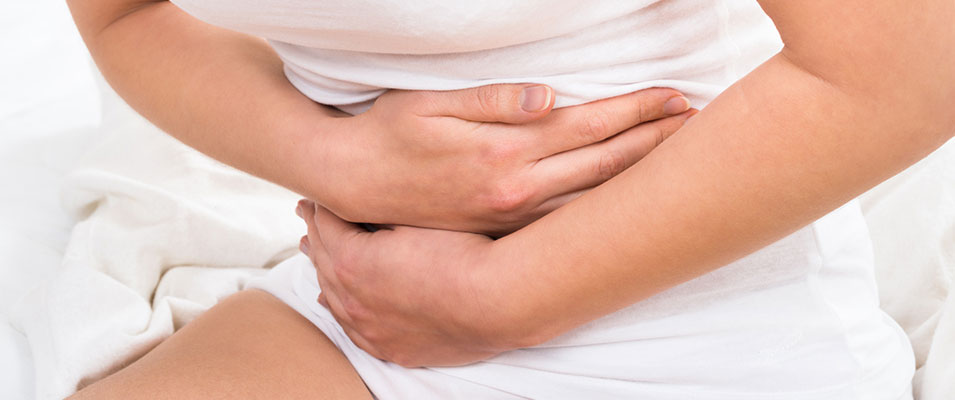
The woman may be asymptomatic or have any of the following symptoms, which usually appear or are more pronounced during menstruation and which over time may increase in intensity:
- Dysmenorrhea (pain during the period)
- Dyspareunia (pain during sexual contact)
- Menorrhagia (too much blood during period) or abnormal vaginal bleeding
- Chronic pain in the pelvic area
- Urinary pain or symptoms of spastic colitis
- Infertility
What are the stages of endometriosis?
Stage I — minimal endometriosis is characterised by isolated implants and no significant adhesions
Stage II — mild endometriosis by superficial implants less than 5 cm in total, without significant adhesions.
Stage III — moderate endometriosis
Stage IV — severe endometriosis, that consists of multiple implants and scarring around the tubes and ovaries or on multiple implants, including large ovarian endometriomas with thick adhesions, respectively.
How is endometriosis treated?
Treatment involves analgesics, hormonal and surgical treatment.
There are many unclear issues in the field of therapy. Below are some conclusions on matters that were in dispute.
- Analgesics and contraceptive tablets, especially when used in a continuous regimen without a seven-day stop, appear to be suitable for young patients with suspected endometriosis from symptoms and laboratory tests and without histological confirmation.
- Hormone therapy for suppressing endometriosis pain includes contraceptives, progestin, danatrol, GnRH agonists (with or without replacement therapy).
- Surgery removal or cauterisation, with open surgery or laparoscopy, is also effective in reducing pain.
- Ovarian cysts (endometriomas) should be removed with their capsule. After removal, hormone therapy may be recommended to decrease the risk of relapse if the patient is not interested in becoming pregnant immediately.
- There is no evidence of the benefits of using hormone therapy as an adjunct to surgery, nor does it seem to be damaging.
- Medication alone does not increase the chances of pregnancy and is not recommended for this reason. In contrast, surgical treatment of light endometriosis (Stage I-II) has a positive effect on infertility. In these patients, intrauterine insemination increases the chances of pregnancy. Hormone therapy after surgical treatment does not seem to help improve fertility.
- In vitro fertilisation, success rates (IVF) appear to be lower for women with endometriosis, although data are contradictory. Suppressing ovarian function with GnRH agonists for 3-6 months immediately before IVF improves its efficacy. Removing large endometriomas (> 3 cm) does not increase the success rate of IVF, although it is suggested to do so if pain exists. In the time between the removal of endometriosis and the onset of IVF, hormone therapy may be considered as it may reduce the likelihood of relapse.